






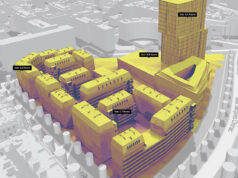
Autodesk Forma Is Expanding Beyond Site Design
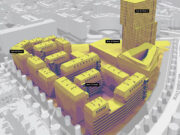
Designing the built environment means working across disciplines, software, and stages of development. But when information gets lost between applications, even the most carefully planned projects can become harder to coordinate. **Autodesk Forma aims to make these connections more seamless**, bringing site planning, architectural design, and civil engineering into a more integrated digital environment. With new developments announced at Autodesk University 2026, the platform is expanding its scope. Here’s a look at what’s changing and what these developments could mean for architects, urban planners, and engineers.
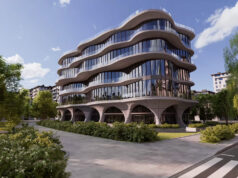
Redshift for Archicad
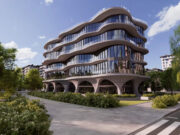
Maxon has recently announced Redshift 2027.0 for Architecture, Engineering and Construction (AEC), expanding its official support to Graphisoft Archicad, alongside the existing integrations with Vectorworks and Autodesk Revit. This addition expands Maxon's architectural visualization offering, drawing on its experience in 3D modeling, rendering and motion graphics to create a more connected workflow from BIM design to final presentation.
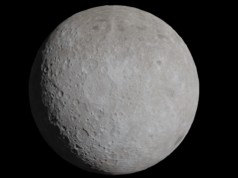
World Creator 4 Announced for November
BiteTheBytes has recently announced World Creator 4 on its Discord server. The new version introduces a new naming system, moving away from the previous 2026.4 version numbering. The release, planned for November, introduces planetary terrain generation, a Cloddy-based architecture, a node-based terrain authoring environment, support for Windows and macOS, and more.
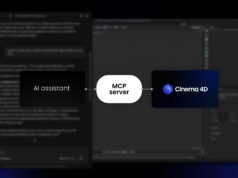
Cinema 4D 2026.4 with built-in Model Context Protocol
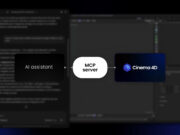
Maxon has recently released Cinema 4D 2026.4, the latest version of its 3D software for modeling and motion graphics. This new update introduces a further integration of AI into the artist workflow through the addition of a dedicated MCP server.
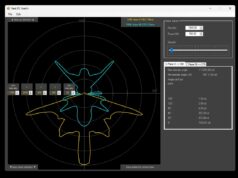
Real IES 3.5 Update: A Sketch for Photometric Lights
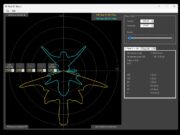
Real IES has released version 3.5, introducing Real IES Sketch, a new way to create custom IES files through a radial approach. The update lets users design complete 360-degree light beams with just a few clicks, offering 3D artists and lighting designers a more intuitive way to shape photometric lighting for their projects.
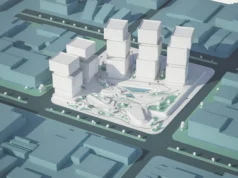
Lumion Axogram: New Approach to Architectural Diagramming
On September 15, Lumion officially announced that it would discontinue the development of Lumion View as a separate program and evolve it into Axogram. Axogram retains all the features introduced with Lumion View, alongside new tools focused on architectural diagramming.
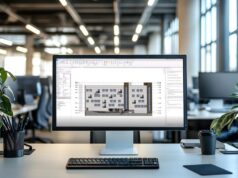
Revit 2027.3: Move Deeper Into BIM
Recently, Revit launched its 2027.3 update, introducing new features focused on workflow enhancement and interoperability across the Autodesk environment. The development of the software is also moving further into AI agents and Model Context Protocol (MCP) servers, two technologies that are beginning to reshape the BIM environment.
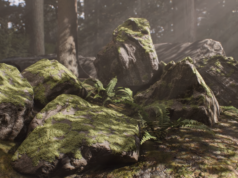
Marmoset Toolbag 5.03: New Texturing, Rendering and Baking Tools
Marmoset has recently released Marmoset Toolbag 5.03, a free update that expands the software's texturing, rendering, and baking workflows. The release introduces new tools such as Text Layers and Scatter Layers, alongside IES light profiles, physical light units, improved curvature baking, and several performance and workflow improvements.

OpenPBR Comes to Substance 3D Painter
Adobe recently released Substance 3D Painter 12.1, introducing initial support for OpenPBR and bringing Adobe's material workflow closer to an increasingly shared standard across the 3D industry. The update follows the adoption of OpenPBR in other Substance 3D applications and aims to improve material consistency and interoperability across different tools.

3D Fashion with CLO 3D 2026.1
CLO Virtual Fashion has released CLO 3D 2026.1, introducing new tools focused on performance, pattern organization, garment simulation and workflow efficiency. The update also expands the software's material and fabric capabilities with new ripping, tearing and stitch workflows.
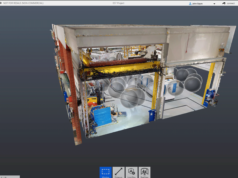
Reality Capture with Recap Pro 2027
Autodesk has released Recap Pro 2027, introducing new tools designed to make reality capture data more structured and easier to integrate into BIM workflows. The update focuses on mesh classification, metadata, cloud collaboration, interoperability and AI-assisted workflows.

Gaussian Splats in 3ds Max 2027.2
Autodesk has released 3ds Max 2027.2, introducing one of the most significant updates to its point-based workflows in recent years. While the release includes only a handful of new features, it brings native support for 3D Gaussian Splats, new point editing tools and render-time instancing, opening new possibilities for architectural visualization and digital content creation.
