



Verge3D is a web-based toolkit developed by Soft8Soft for Blender, Maya, and 3ds Max. Since its release in 2017, the platform has been used across a wide range of industries thanks to its ability to create interactive 3D experiences, animations, simulations, product configurators, and web presentations directly inside a browser.
The Challenge of Real-Time Web Visualization
One of the biggest challenges in 3D Real-TIme visualization has always been balancing visual quality with performance. While this is already difficult in desktop applications, delivering interactive 3D content through a web browser introduces additional technical constraints.
Large models, detailed materials, and complex scenes can quickly become difficult to manage when the goal is to provide smooth performance across different devices and internet connections.
To address this challenge, platforms such as Verge3D have emerged, offering workflows specifically designed to optimize and distribute interactive 3D content through the web without sacrificing usability.

How Verge3D Works
A Familiar Workflow
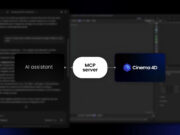
One of Verge3D’s main goals is accessibility. Rather than forcing artists to learn entirely new software, the platform integrates directly with Blender, Maya, and 3ds Max.
Users can build scenes inside their preferred DCC application and instantly preview the results in a web browser through Verge3D’s Sneak Peek feature. This approach significantly reduces the learning curve while maintaining familiar workflows.
Puzzles Visual Scripting
Another key component of the platform is Verge3D Puzzles, a visual scripting system that allows users to create interactive web applications without writing code.
Through a node-based workflow, artists and designers can add logic, animations, interactions, and user controls to their projects without relying on HTML, CSS, or JavaScript. The system can be used both for rapid prototyping and production-ready applications.
Puzzles also provides access to modern technologies such as WebXR, allowing developers to create VR and AR experiences directly from the visual scripting environment.
Physically Based Rendering
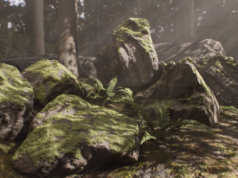
Visual quality remains a core aspect of the platform. Verge3D includes a Physically Based Rendering (PBR) pipeline that supports realistic materials and lighting workflows.
This approach helps creators deliver visually convincing web experiences while maintaining the performance required for browser-based applications.


Applications in Architecture and Construction
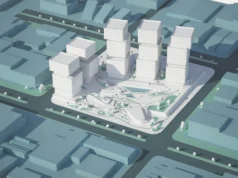
Although Verge3D serves multiple industries, its capabilities make it particularly interesting for architecture, engineering, and construction workflows.
Interactive building models, infrastructure visualizations, and industrial projects can all be distributed through a standard web browser without requiring users to install dedicated software.
The addition of interactivity opens the door to several practical applications, including:
- Real-estate walkthroughs
- Client presentations
- Design reviews
- Interactive project exploration
- Collaboration between different stakeholders
Because projects run directly in a browser, teams can easily share experiences across devices, simplifying communication throughout the design process.
While Verge3D does not aim to compete with high-end real-time engines in terms of photorealistic rendering quality, it offers significant advantages in accessibility, portability, and ease of distribution.

Other Applications
Beyond architecture, Verge3D has found applications across several industries.
- E-Commerce: The platform can be used to create interactive product configurators and online shopping experiences that allow customers to explore products in real time.
- Product Marketing: Brands can build immersive product presentations, interactive demonstrations, and promotional experiences directly within a web browser.
- E-Learning: Verge3D can integrate with Learning Management Systems (LMS), making it useful for interactive educational content and training simulations.
- Science and Education: Researchers and educators can present complex data, experiments, and simulations through interactive 3D experiences that offer greater engagement than traditional 2D presentations.

Conclusion
Verge3D approaches real-time visualization from a different perspective compared to traditional visualization platforms. Rather than focusing exclusively on photorealistic rendering, the software aims to make interactive 3D experiences accessible through standard web browsers.
Its integration with Blender, Maya, and 3ds Max, combined with the visual scripting system, lowers the technical barrier for artists and designers who want to create interactive content without extensive programming knowledge.
While Verge3D may not yet compete with dedicated real-time engines in terms of visual fidelity, its strengths lie in accessibility, interactivity, and ease of distribution. For architecture, construction, product visualization, and educational applications, the ability to share immersive experiences through a simple web link can often be more valuable than achieving maximum graphical quality.
As browser technologies and WebXR continue to evolve, platforms like Verge3D demonstrate how interactive 3D content is becoming increasingly accessible, opening new possibilities for collaboration, presentation, and communication across multiple industries.
To find out more, visit the Verge3D Official Site.
– article by G. D’Ambrogio